
Now Is the Time to Prepare for Next Fire Season
 by Kyle Reed, Wildfire Mitigation Supervisor
While cooler temperatures, shorter days, and changing weather patterns bring some much-needed relief throughout the area after a record-breaking fire season, it doesn’t signal the end of wildfire preparedness. In fact, the fall, winter and spring months provide some of the best opportunities to prepare your home and property for the next fire season.
Wildfire preparedness starts around the home. Start by looking at the first five feet surrounding your house and outbuildings. Remove leaves, pine needles and other debris from roofs, gutters, decks and areas underneath porches where debris has accumulated. Also, consider replacing bark mulch and other flammable mulch products next to your home with gravel, rock, pavers or other non-combustible materials.
Home hardening is another important part of wildfire preparedness. Home hardening looks at your roof, vents, windows, siding, fencing, and decks for areas where direct flame contact or wind-driven embers could ignite your home. If updates are needed to the exterior of your home, consider using fire resistant building materials to help reduce the likelihood of structure ignition during a wildfire.
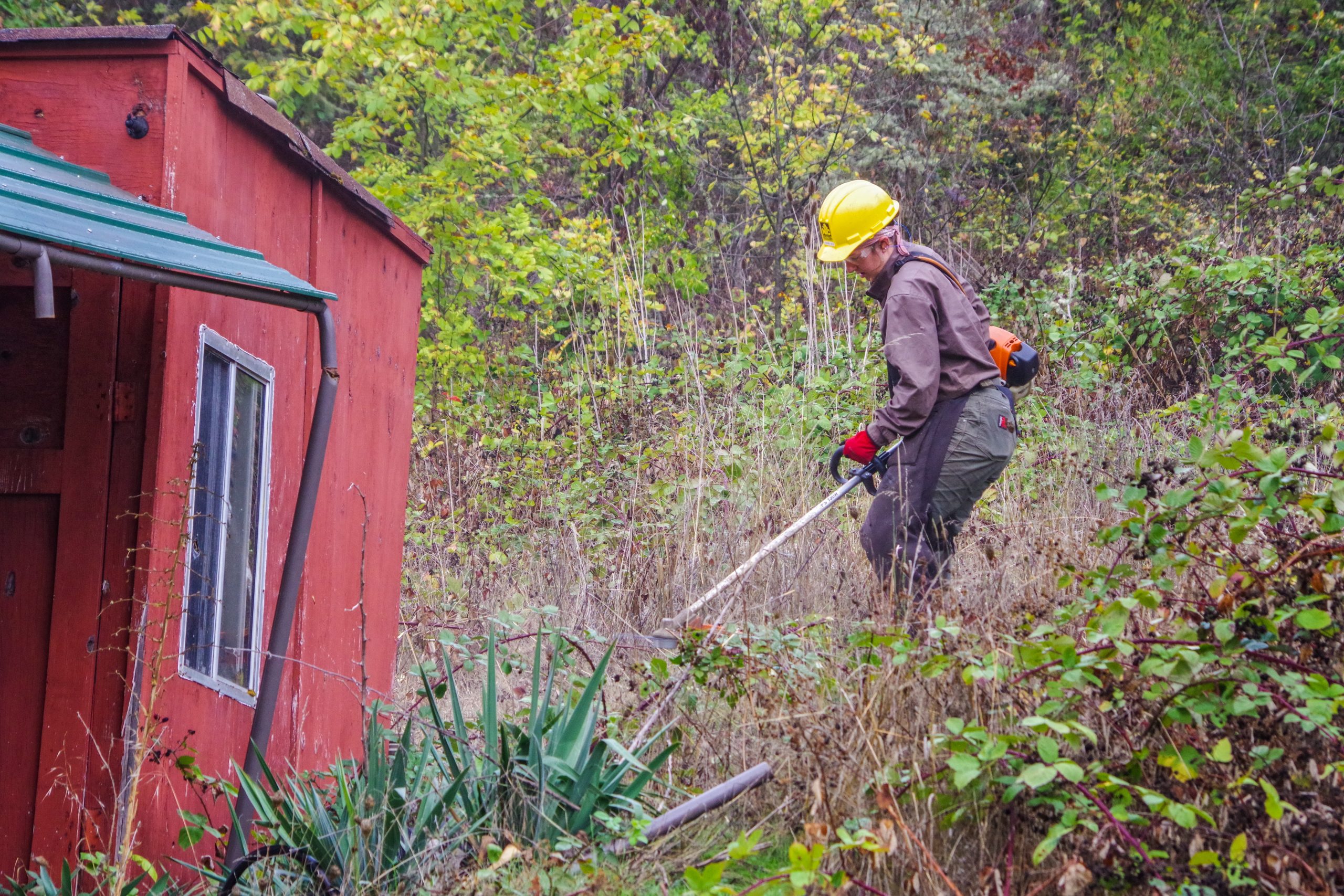
Once your home itself and the area immediately around it has been addressed, focus your efforts on the first 100 feet from your home or to your property line, whichever comes first. Look for dead vegetation, accumulated brush, and “ladder fuels” that can allow fire to move from the ground into tree canopies. Prune trees, remove dead branches and maintain vegetation around your home, outbuildings, and driveways.
The off-season is also a good time to tackle mitigation projects beyond the 100-foot mark, such as thinning, pruning, and chipping on a larger scale. If debris burning is incorporated into your mitigation projects, check with your local wildfire agency or structural fire department before you begin to see if burning is allowed in your area and if a burn permit is required.
The important thing to remember is that you don’t have to do everything at once! Start with one project near your home and keep working outward. The work you complete during the off-season can help protect your home, make your communities more resilient, and give firefighters a safer place to work during future wildfire events.
If you have wildfire mitigation questions, or would like an on-site wildfire assessment of your home or property, please contact Cow Creek Umpqua Tribal Fire Management at firemanagement@cowcreek-nsn.gov.