
Set Your Mind on Longevity
 By Arika Tenbrook, Public Health Registered Nurse
A long, healthy life is something many of us hope for and work towards; making choices that lead to longevity can be difficult and a strong mind is needed to consistently make healthy decisions.
Be optimistic
Studies have shown that people who are optimistic about their life tend to live longer than those who are not. Some sources suggest genetics can play a role in optimism, but there are other factors within your control that can help you be more optimistic. Setting small achievable goals, practicing positivity, and reframing situations in a positive aspect are all ways to increase optimism. Prayer and meditation can also help you to transition from a pessimistic to optimistic mindset.
Tap into habit formation
Habits are actions that are automatically triggered by context clues; for example, locking your door (action) when leaving the house (contextual clue). Over time habits form after repeating an action each time you are presented with a specific contextual clue. A study at University College London in 2009 found that it takes an average of 66 days to form a habit. The study found that consistent daily repetition was the most significant factor in habit formation. The psychology of habit formation can be used to practice positivity, form exercise habits or to form healthy eating habits. Learn more about habit formation here.
Move your body
Exercise is key to a healthy mind and can improve thinking, learning, problem solving, emotional balance and memory. Exercise also causes the release of endorphins or “feel good chemicals” in the brain, which can help to decrease anxiety and depression. Exercise does not need to be complicated; many studies show that simple exercises like walking provide the benefits listed above and other health advantages. Adding strength and flexibility exercises will further improve your overall health.
Nourish your gut and brain
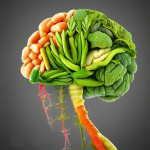
In recent years science has shown a link between our digestive system and our brain. The gut can affect our mood, the way we think and our overall health; scientists are now calling it our second brain. Gut health goes beyond choosing the right foods to nourish us and our gut bacteria, it also means avoiding foods that harm us. While we agree junk foods can be harmful, certain people need to avoid foods they are sensitive to, milk for example. Brain and gut supporting eating patterns like the MIND diet are optimal for sustaining both our mind and gut health (to learn more about the MIND diet, read Dr. April Gilliom’s article).
Community
Being supported and surrounded by a strong community helps meet our needs of belonging and connection. Unfortunately, loneliness is a significant concern in the US; 6/10 adults report feelings of loneliness and social isolation. To foster community and reduce loneliness, connect with family and friends, join a group, church, or club, and/or spend time caring for others. Having a sense of purpose and belonging increases motivation to maintain other healthy, life lengthening habits.
Cultivate a strong mind today for a healthier, happier tomorrow.
More Resources: