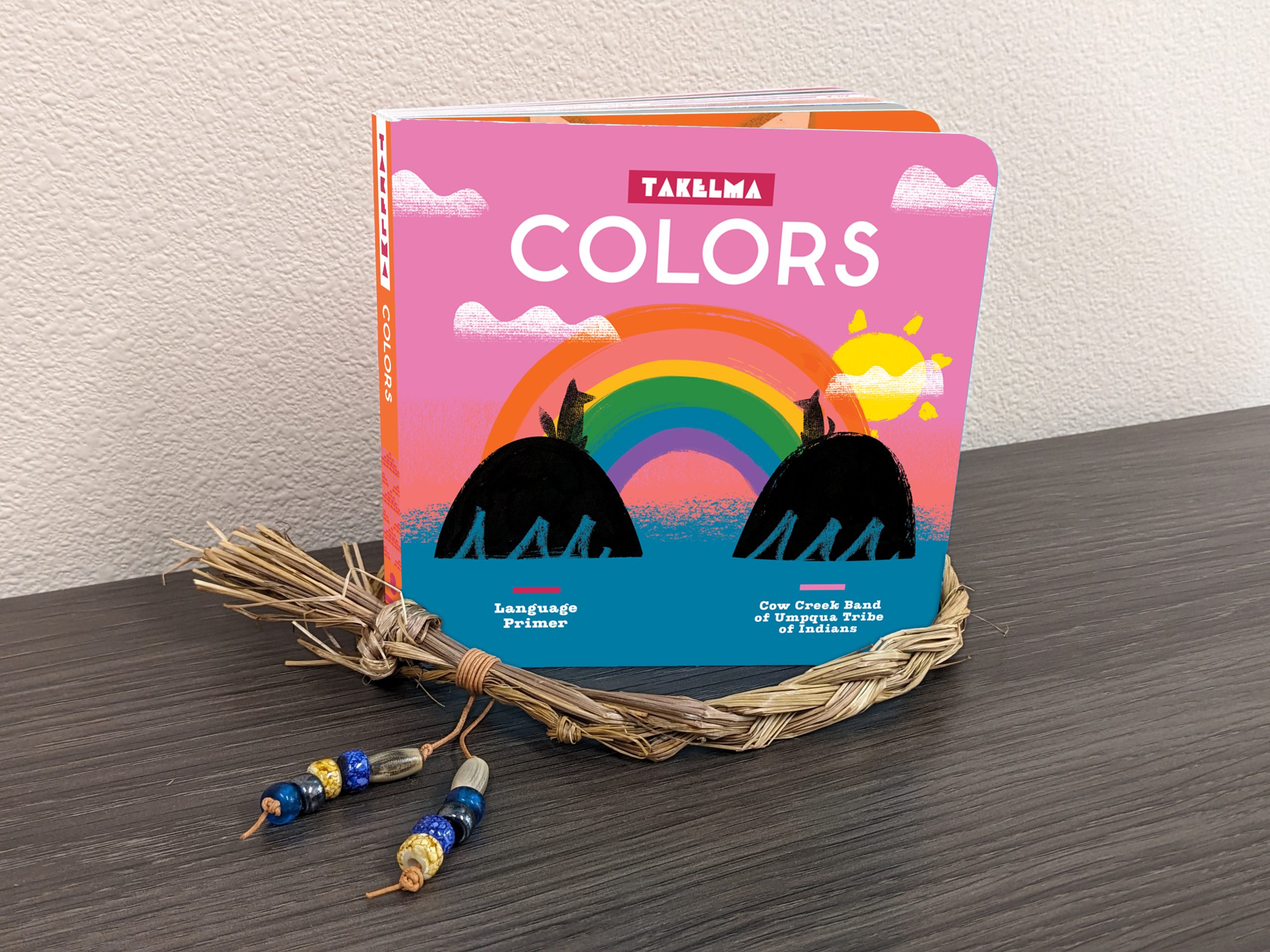

Takelma Colors Joins International Collection of Endangered Language Books

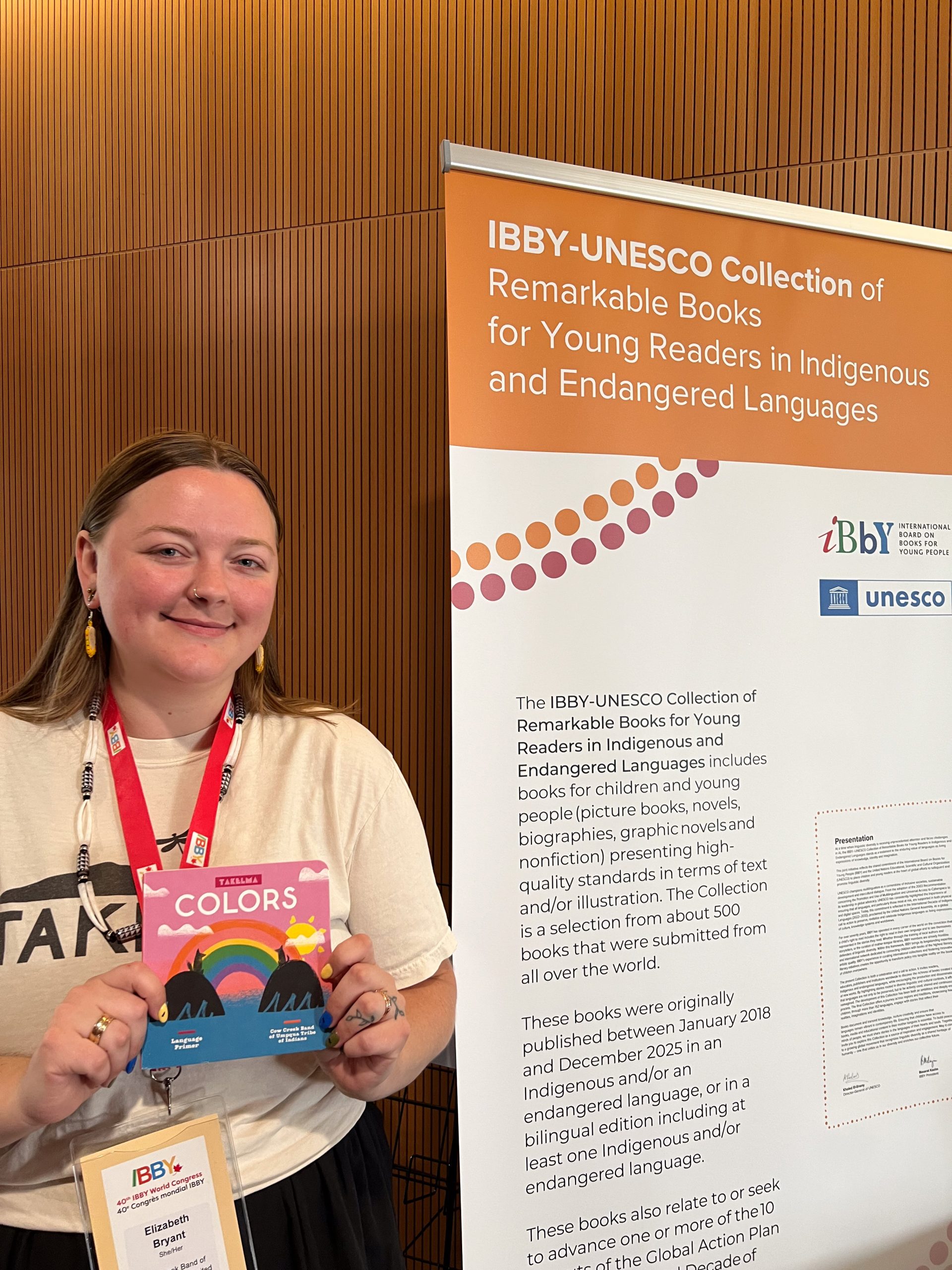 Takelma Colors joined the IBBY-UNESCO Collection of Remarkable Books for Young Readers in Indigenous and Endangered Languages, an honor that was announced during the 40th IBBY World Congress in Ottowa, Canada.
The conference was hosted by the International Board on Books for Young People (IBBY), featuring four days of celebration and exploration of the theme “Listening to Each Other’s Voices,” and included the announcement of the newest version of the collection of language books.
“We are honored to be selected,” said Takelma Language Teacher Learner Elizabeth Bryant. “There are many amazing books in this collection!”
The collection is a partnership between IBBY and the United Nations Educational, Scientific, and Cultural Organization (UNESCO), that aims to preserve languages that are in danger of becoming extinct by the turn of the century. The project hopes to “draw global attention on the critical situation of many indigenous languages and to mobilize stakeholders and resources for their preservation, revitalization, and promotion.” According to IBBY’s website, 40% of the approximately 7,000 languages around the world may disappear by the end of the 21st Century, due to a lack of speakers. The collection of over 160 books is curated by an international committee of “influential international experts on children and young adult books who play a positive role in the empowerment of Indigenous identities and languages.”
The collection’s entry on Takelma Colors reads:
“Coyote and Fox are bound by a fierce rivalry that drives them to challenge each other again and again. Using imagery specific to the Cow Creek Umpqua Tribe’s land and history, this book follows their heated competition through the traditional Takelma story told by Frances Johnson, the last known first-language speaker of the Takelma language, who passed away in 1934. By introducing Takelma vocabulary to young learners, this book aims to promote Tribal history and support the language’s revitalization.”
View the IBBY-UNESCO Collection by clicking this link. Takelma Colors is featured on page 108.