West Fork Canyon Creek Culvert Removed
An oversized, rusted culvert was removed from Cow Creek Umpqua Tribal land this month near Canyonville, allowing water to flow freely again in the stream bed and bringing hope that native fish species will follow along this fall.
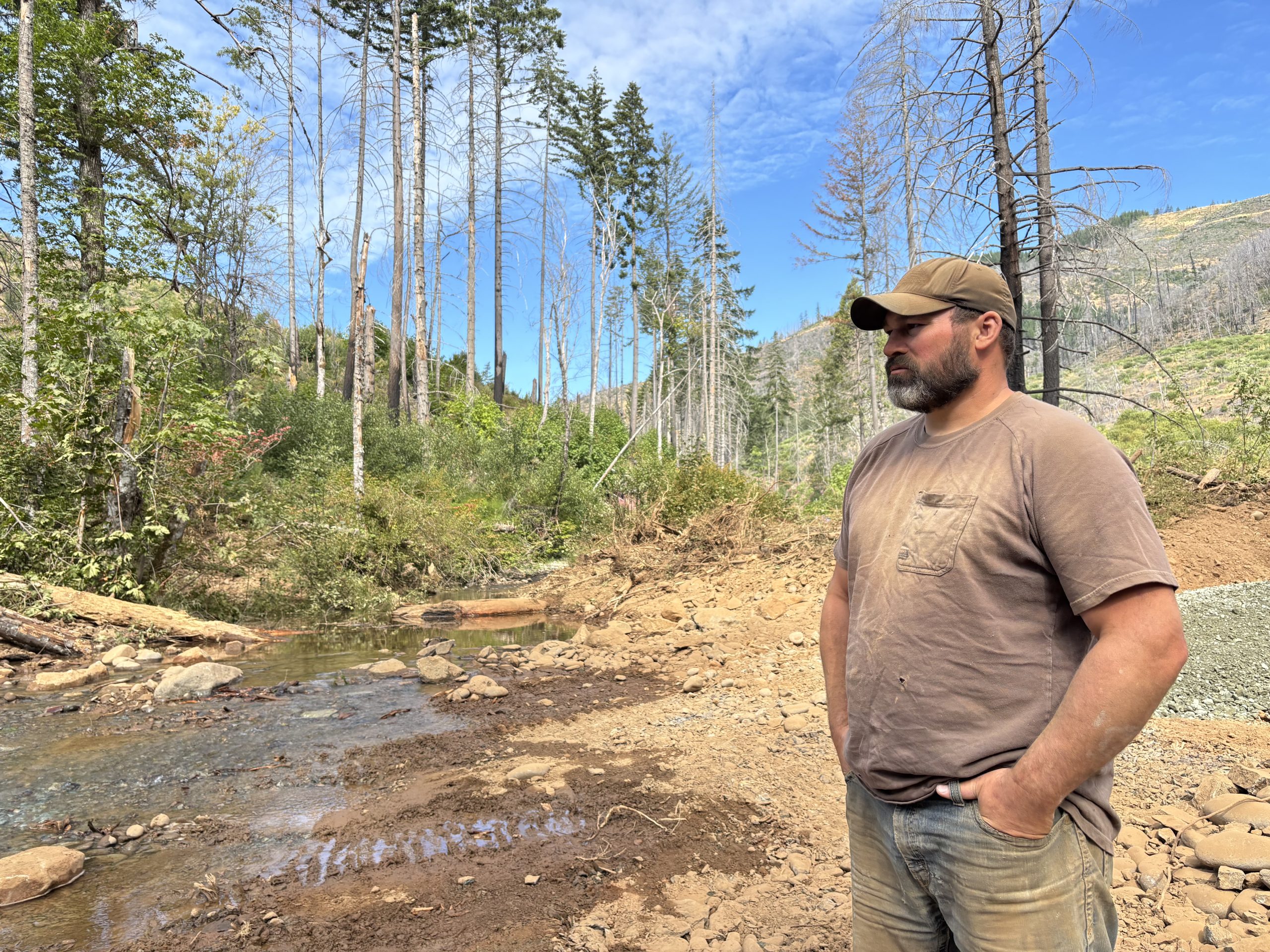
Red Butte Enterprises Owner/ Operator Chris Rondeau at West Fork Canyon Creek
The culvert was removed from West Fork Canyon Creek, in the area of the Milepost 97 burn scar. For several years, Natural Resources staff have been studying and mapping culverts on Tribal lands with the assistance of Resource Legacy Fund (RLF), an agency that works to identify and remove culverts that contribute to significant stream degradation and are an impediment to fish passage and spawning. Specifically for this project, RLF staff focused on the more than 17,000 acres that were returned to the Cow Creek Umpqua as part of the 2018 Western Oregon Tribal Fairness Act.
Of the 951 culverts found on Cow Creek Umpqua land, some big and some small, the West Fork Canyon Creek culvert was seen as a high priority for removal. First, the size of the culvert, large enough to fit a full grown person inside, is seen as unnecessary today with modern improvements to road engineering. Second, the culvert was aging rapidly, with rusted out portions that deposit metals into West Fork Canyon Creek. Finally, the culvert had recently weathered additional damage in the March flooding event that brought walls of logs, debris and mud down the mountainside, clogging the culvert and making the road that passes over top more hazardous.
Cow Creek Umpqua Natural Resources staff and RLF worked with engineers to design a low-water crossing for West Fork Canyon Creek, which still permits fish, wildlife and vehicles to cross when creek levels are at their lowest. On August 5, the aging, crumbling culvert was removed completely, and new fish habitat began to be restored.
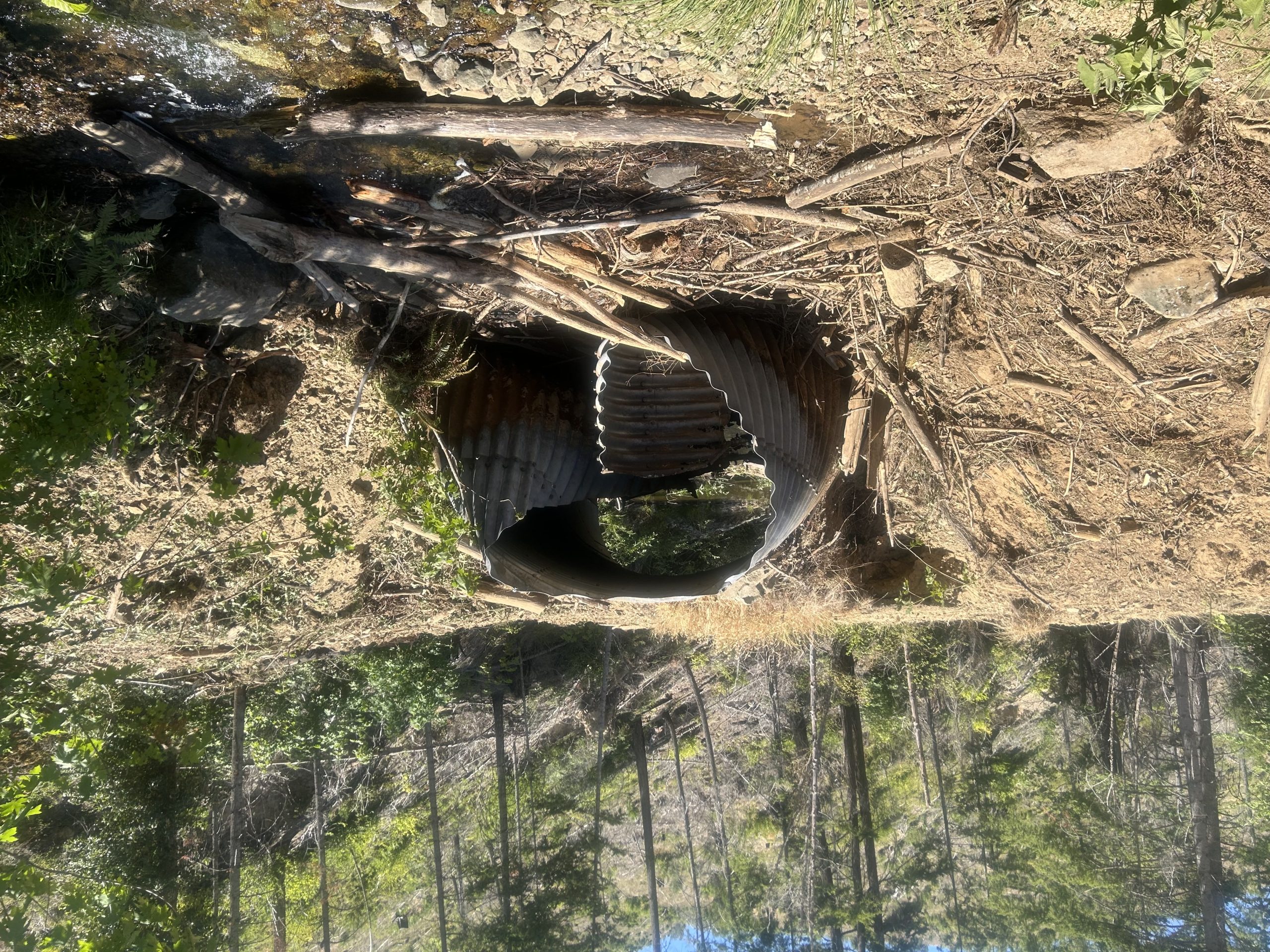
The West Fork Canyon Creek Culvert before removal
In addition to improving the natural conditions for fish and wildlife, the project’s heavy lifting was completed by a Tribal citizen. Chris Rondeau, owner of Red Butte Enterprises, was hired to extricate the culvert and the debris, smooth the low-water crossing, and place logs in the stream for spawning habitat.
Over the next several months, staff will continue to monitor West Fork Canyon Creek for the return of native salmon, steelhead and Coho.
“Culverts may not seem like the biggest venture to devote resources and manpower to, but with such a shortage of clean, cold water in our region, we have to do everything we can to improve the stream quality and habitat for our wildlife,” said Chairman Carla Keene. “It ensures our Tribal lands remain healthy for generations to come, and supports the work of our Tribal citizens on their land.”